Superintendents: Brett Jurgens and Anna Barr
- ONLY 1 ENTRY PER CLASS NUMBER PER 4-H MEMBER.
- 4-H members are only allowed to enter exhibits in 1 photography level (i.e. Level 1, 2 or 3).
Photos may be taken with any type of film or digital camera, including phones, tablets and drones. An image may only be used on 1 exhibit, with the exception of Portfolios, which may include images entered in other classes. Photos must be shot by 4-H member during the current project year, with the exception of the Portfolios, which may include images captured and/or exhibited in previous years. Photos need to be appropriate for 4-H.
Securely attach photos. Photos that are unattached will be disqualified. Do not use photo corners, borders or place coverings over the exhibits. Do not include negatives.
Data Tags are required on all classes. Data Tags should be securely attached to the back of the exhibit. Photos without Data Tags will not be accepted.
- Special Awards to Top Level 1, Top Level 2, Top Level 3, Top Favorite Photo,
- Top Creative Photography Exhibit, Top Black & White Photo and Top Portrait

Any Photography class may be an America’s 250th Anniversary theme exhibit!
Display Exhibits (Levels 1 & 2)
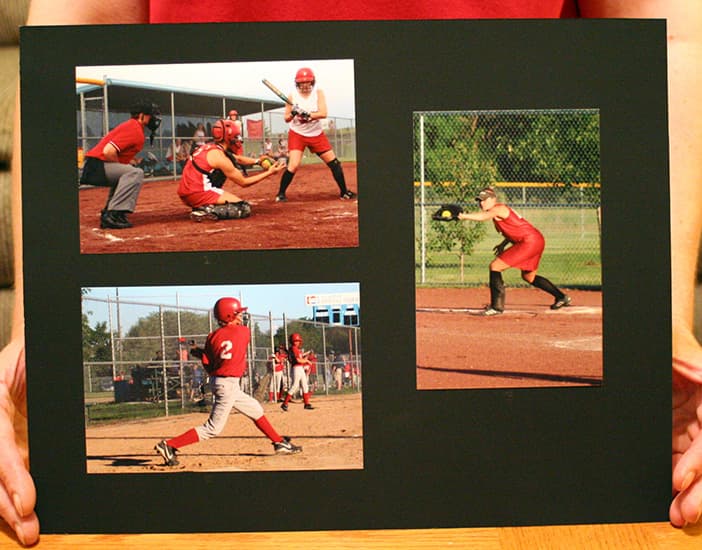
- Displays consist of THREE DIFFERENT SMALL photos related to the topic of ONE CLASS.
- 4-inch x 6-inch photos mounted on a single HORIZONTAL poster or matting board, 11 inches x 14 inches, black (preferred) or white. Incorrect sizes of photos and board will not be accepted. No foam board backing.
- PHOTOS MAY BE MOUNTED VERTICALLY or HORIZONTALLY, whichever is best for the composition.
- Each photo on picture display must be numbered using a pencil. Numbers should be readable but not detract from display.
- No titles, captions or stick-on numbers allowed.
- Appropriate level Data Tags are required. EACH PHOTO MUST INCLUDE A SEPARATE DATA TAG. Data Tags should be numbered with the corresponding photo’s number. Securely attach the tags to the back.
Print Exhibits (Levels 1, 2 & 3)
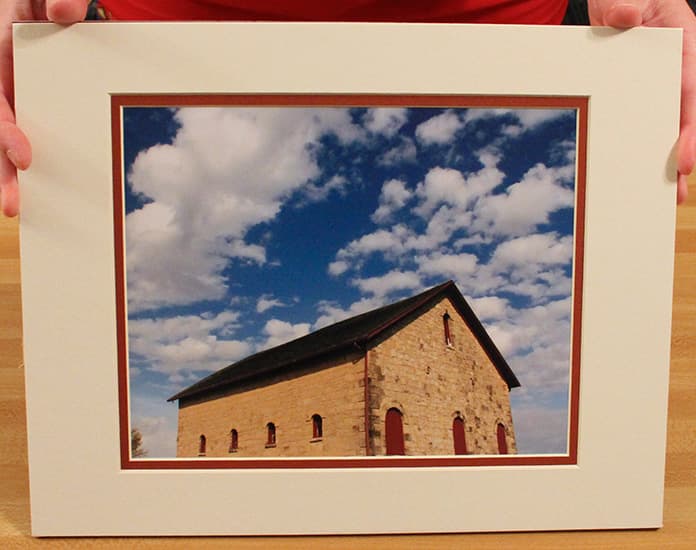
- Prints consist of ONE LARGE photo related to the topic of ONE class.
- All print exhibits are 8-inch x 10-inch prints mounted in 11-inch x 14-inch (outside size) mat with with a rectangular or oval inside opening. Use an ADDITIONAL MAT BOARD ON THE BACK (not foam core board) to create a “sandwich” with the photo between. This protects the photo. Incorrect sizes will not be accepted. No frames.
- Place photos horizontally or vertically as appropriate. Place the data tag on the back in the direction you want the photo to be viewed.
- Appropriate level Data Tags are required. Securely attach the tags to the back.
- Mats can be single, double and any color. Choose a mat color which looks good with your photo.
Portfolios (Levels 2 & 3)
All portfolios must include the following information: 1) 1-page maximum autobiography, 2) table of contents, 3) year each photo was taken, 4) title for each image, 5) device make and model used to capture each image and 6) reflections for each photo. When writing reflections, youth should focus on what new photography techniques or skills they were practicing when they took the photo, what makes the image successful and what could have been done to improve the image. Data Tags are NOT required. Portfolios may be presented in either print or digital formats:
- Printed portfolios should be presented in an 8.5-inch x 11-inch 3- ring binder or similar book format. Recommended photo size is 8 inches x 10 inches. Matting is not necessary.
- Digital portfolios may be presented online and must be exhibited along with a single 8.5-inch x 11-inch flyer. Flyers must include a link, URL or QR code that takes users (judges and fairgoers) to their online portfolio.
Example Data Tags
Level 1
Name: _________________________ 4-H Age: ________ County: ____________
Years in Photography: ________ Years in the Current Level: ________
Camera: (brand make & model) ___________ (digital or film)___________
Tell us about this photo (special equipment, techniques, subject, location, goals, etc.). _________________________
Describe any edits or changes made to the picture using digital software. _________________________
Level 2
Name:_________________________ 4-H Age:________ County:____________
Years in Photography:________ Years in the Current Level:________
Camera: (brand make & model) ___________ (digital or film)___________ Focal Length:___________
Type/Source of light: ___________
Tell us about this photo. Include any special equipment or techniques used. _________________________
Describe any edits or changes made to the picture using digital software. _________________________
Level 3
Name:_________________________ 4-H Age:________ County: ____________
Years in Photography:________ Years in the Current Level:________
Camera: (brand make & model) ___________ (digital or film)___________ Focal Length:___________
Shutter Speed: ___________ F Stop:___________ ISO:___________ Type/Source of light:___________
Identify advanced equipment, techniques, or manual adjustments used to capture this image. _________________________
Tell us about this photo. _________________________
Describe any edits or changes made to the picture using computer software. _________________________
🔎 PHOTOGRAPHY DATA TAGS LEVELS 1, 2 & 3: Available as self-adhesive labels at the Extension office and as fill-in PDFs at 4-H Static Exhibits.
PHOTOGRAPHY BASICS — LEVEL 1
Activity numbers in these exhibit classes correspond to the “Book 1: Photography Basics” 4-H project book. Using the project book is optional.
- Premiums: Purple $3; Blue $2; Red $1; White $0
- No state fair entry
B180910 Fun With Shadows Display or Print — photos should capture interesting or creative use of shadows. (Activity 4)
B180920 Get In Close Display or Print — photo should capture a close-up view of the subject or object. (Activity 8)
B180930 Bird’s or Bug’s Eye View Display or Print — photo should capture an interesting viewpoint of a subject, either from above (bird’s eye view) or below (bug’s eye view). (Activity 10)
B180940 Tricks and Magic Display or Print — photos should capture visual trickery or magic. Trick photography requires creative compositions of objects in space and are intended to trick the person viewing the photo. For example, if someone is standing in front of a flower pot, the pot might not be visible in the image, making it look as if the flowers are growing out of the person’s head. (Activity 11)
B180950 People, Places or Pets with Personality Display or Print — photos should have a strong focal point, which could be people, places or pets. Photos should capture the subject’s personality or character. Photos may be posed or un-posed. (Activity 13)
B180960 Black and White Photography Display or Print — photos should create interest without the use of color. Photos should show strong contrast and/or textures. Photos may be captured in black and white or captured in color and edited to black and white. (Activity 15)
B180970 Telling a Story Display — exhibit will include 3 to 5 photos which tell a story without words (this number of photos is ONLY for this class). Photos may show something being created, destroyed, consumed, moving or growing. Photos should capture the beginning, middle and end of a single story, project or event. No titles, captions or stick-on numbers are allowed. (Activity 14)
B180980 Favorite Photo Print Exhibit — entry will consist of an exhibit print of the favorite picture the 4-H member has taken this current project year.
NEXT LEVEL PHOTOGRAPHY — LEVEL 2
Level 2 photographers should be utilizing all the skills and techniques they have developed thus far in their photography careers, especially topics covered in” Book 1: Photography Basics” and “Book 2: Next Level Photography.”
Activity numbers in these exhibit classes correspond to the “Book 2: Next Level Photography” 4-H project book. Using the project book is optional.
- Premiums: Purple $3; Blue $2; Red $1; White $0
B181010 Level 2 Portfolio — represents the photographer’s best work and must include 5 to 7 different images from the 4-H member’s photography career. At least 2 images must have been taken during the current year. The remaining images may have been taken at any time during the member’s 4-H experience and may have been previously exhibited. Portfolios may include photos which are exhibited in other Level 2 classes during the same year. Portfolios must include: 1) 1-page maximum autobiography, 2) table of contents, 3) year each photo was taken, 4) title for each image, 5) device make and model used to capture each image and 6) reflections for each image. When writing reflections, 4-H members should focus on what new photography techniques they were practicing when they took the photo, what makes the image successful and what could have been done to improve the image.
B181020 Creative Techniques & Lighting Display or Print — photos capture a creative use of lighting, such as diffused lighting, backlighting or hard lighting, reflections or another lighting technique covered in “Next Level Photography.” (Activity 3, 4, 5)
B181030 Creative Composition Display or Print — photos capture a creative composition using the Rule of Thirds, Golden Triangle, Golden Rectangle or another composition technique covered in “Next Level Photography.” (Activity 6, 7, 8, 9)
B181040 Abstract Photography Display or Print — abstract photos capture a small piece of larger subject. Abstract photos may not look like anything in particular but should be able to capture a viewer’s attention. (Activity 11)
B181050 Candid Photography Display or Print — candid photos capture a special moment or meaningful interaction. Photos should be un-posed. (Activity 10)
B181060 Expression Through Color Display or Print — photos capture a creative use of color or a color scheme, such as complimentary, contrasting, monochromatic, warm, cool, primary, secondary or tertiary. (Activity 13)
B181070 Black & White Photography Display or Print — a black and white photograph that demonstrates strong use of composition, lighting, and contrast. Photos may be taken with any camera type (digital or film) but must be printed in black and white. 🆕
B181080 Creative and Experimental Photography Print — using original photos a 4-H member has captured, create an exhibit in black and white or color demonstrating the use of creative or experimental technology or techniques. Alterations to the exhibit must be apparent. Examples of methods to use may include using artificial intelligence (AI) or software tools to edit or replace the original pixels of the image. AI may be used when creating this exhibit with adult care-giver permission. Any AI work must be referenced. The 4-H member’s original work must be the majority of the exhibit. Using photos and other work found online is not acceptable. Must include a 4 inch x 6 inch copy of each original image(s) used on the back of the matted exhibit, describe how the image(s) were altered and the equipment or software used. 🆕
B181910 Favorite Photo Print Exhibit (county only) — entry will consist of the favorite picture the 4-H member has taken this current project year.
MASTERING PHOTOGRAPHY — LEVEL 3
Level 3 photographers should be exploring and experimenting with advanced techniques. This may include, but does not necessarily require, using an SLR camera, manual adjustments or other advanced equipment. Level 3 photographers should be utilizing all the skills and techniques they have developed throughout their photography career, especially topics covered in “Book 1: Photography Basics,” “Book 2: Next Level Photography” and “Book 3: Mastering Photography.”
Activity numbers in the exhibit classes below correspond to the “Book 3: Mastering Photography” 4-H project book. Using the project book is optional.
- Premiums: Purple $4; Blue $3; Red $2; White $0
B182010 Level 3 Portfolio — represents the photographer’s best work. Level 3 portfolios must include 9 to 11 images from the 4-H member’s photography career. At least 3 images should be from the current year. The remaining images may have been taken at any time during the member’s 4-H experience and may have been previously exhibited. Portfolios may include photos which are exhibited in other Level 3 classes during the same year. Portfolios must include: 1) 1-page maximum autobiography, 2) table of contents, 3) year each photo was taken, 4) title for each image, 5) device make and model used to capture each image and 6) reflections for each image. When writing reflections, 4-H members should focus on what new photography techniques or skills they were practicing when they took the photo, what makes the image successful and what could have been done to improve the image.
B182020 Advanced Techniques & Lighting Print — photos show an experimentation or exploration of advanced lighting, such as low-light or silhouette photography or another advanced photography technique such as astrophotography, underwater photography or infrared photography. (Activity 3, 4, 5 or 12)
B182030 Advanced Composition Print — photos show advanced compositions, such as using diagonal, horizontal or vertical lines or repeating shapes to frame a subject or lead the viewers eye through a scene; breaking the rule of thirds to compose a discordant image; or another advanced composition technique covered in Book 3 Mastering Photography. (Activity 6, 7)
B182040 Portrait Print — a great portrait captures not only a person’s physical image, but also something of the person’s character or personality. Photos may be either formal or informal but must be of 1 or more human subjects. (Activity 9)
B182050 Still Life Print — photos capture non-moving objects that have been arranged in an interesting way. Photos demonstrate advanced control over lighting and composition. (Activity 8)
B182060 Freeze/Blur the Moment Print — photos capture a subject in motion. Photographers should adjust shutter speed to either freeze or blur the movement. (Activity 11)
B182070 Black & White Photography Print — photo demonstrates advanced black and white photograph with strong technical ability and creative expression. Photo demonstrates intentional use of contrast, lighting, and composition to create visual impact. Advanced editing is allowed as appropriate for black and white imagery. 🆕
B182080 Creative and Experimental Photography Print — Using original photos a 4-H member has captured, create an exhibit in black and white or color demonstrating the use of creative or experimental technology or techniques. Alterations to the exhibit must be apparent and advanced techniques used. Examples of methods to use may include using artificial intelligence (AI) or software tools to edit or replace the original pixels of the image or other advanced techniques. AI may be used when creating this exhibit, with adult care-giver permission. Any AI work must be referenced. The 4-H member’s original work must be the majority of exhibit. Using photos and other work found online is not acceptable. Must include a 4 inch x 6 inch copy of each original images on the back of the matted exhibit, describe how the image(s) were altered and the equipment or software used. 🆕
B182906 Manual Setting Exhibit Print (county only) — entry will consist of a print that showcases the participant’s ability to master the manual settings on the camera: 1) manual focus, 2) manual aperture, 3) manual shutter speed, 4) combination of any of the listed techniques, 5) other technique not listed.
B182910 Favorite Photo Print Exhibit (county only) — entry will consist of the favorite picture the 4-H member has taken this current project year.