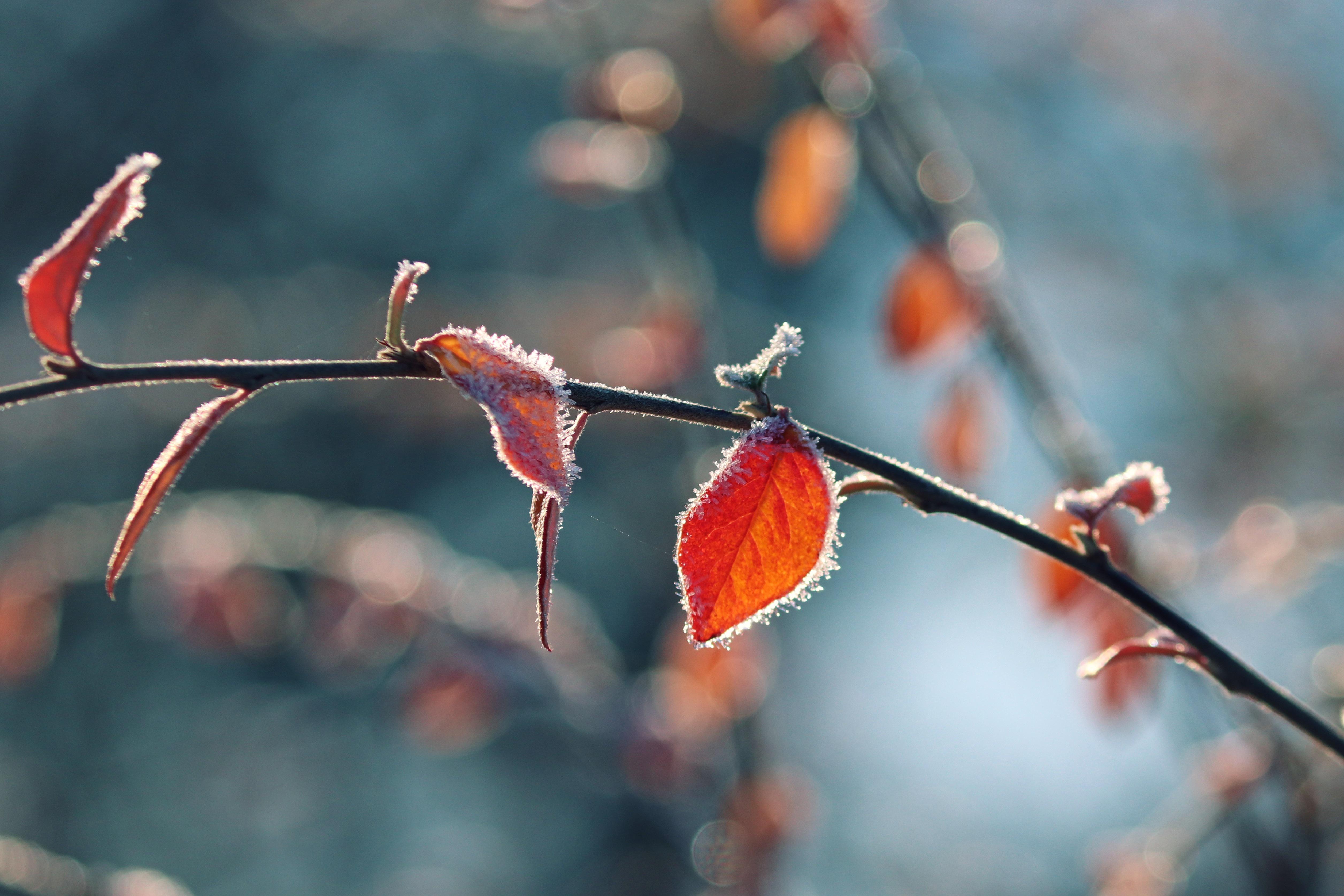
Frost can form as ice crystals on plant leaves when temperatures fall below 32-36 degrees Fahrenheit. Photo from Pixabay.com.
Frost is the formation of small ice crystals on leaves, petals or grass blades and can be thought of as frozen dew. Seeing frost on plants in the morning is an indication that temperatures have gotten cold enough during the night to cause water to freeze. For most hardy plants in the landscape (rated for USDA Hardiness Zone 4 or below for western Nebraska and Zone 5 or below for eastern Nebraska), the first frost of autumn naturally signals a change in seasons. Deciduous perennial plants start to shed their leaves, transitioning into winter dormancy, while non-hardy plants including annuals and tropicals inevitably succumb to the cold.
Often, frosts and freezes pass through our landscapes without much notice or cause for concern. Sometimes, however, such events affect yards, gardens, trees and lawns in undesirable ways. Follow these nine tips to prevent unwanted damage before the cold hits.
1. Pay attention to the weather forecast.
Check the weather forecast before the average first frost date of the year, which is mid-September in northwest Nebraska and early October in southeast Nebraska. Then take proactive measures to protect vulnerable plants as nighttime temperatures are set to dip toward freezing, typically between 36-32°F. Calm, clear nights have the potential to do more damage than windy or stormy nights.
2. Mulch and water plants, especially those newly planted.
Did you plant any new trees, shrubs, or perennial flowers or grasses after July of this year? If so, they are in danger of harm from frost cracking or frost heaving over the winter. As prevention, keep young plants well-mulched and well-watered through autumn. While not as critical, this is good practice for established plants, too.
6-12 inches of straw, pine needles, or shredded wood or leaf mulch can be applied after several hard frosts on top of the normal 2–3-inch mulch layer as additional insurance for newly planted flowers and grasses. This works well for certain crown-tender species, too, such as strawberries and hybrid tea or climbing roses. Just make sure to remove the extra mulch layer next spring.
3. Don’t cut spent foliage all the way to the ground.
Leave at least 12 inches standing if cutting back flowers and grasses over the winter. Keeping lower leaves and stems intact provides plant crowns with insulation from cold and wind while serving as next year’s nesting habitat for beneficial insects such as pollinating bees.

4. Safeguard trees from frost cracking.
Many tree species, especially young or smooth-barked deciduous trees, are susceptible to frost cracking on their trunks. As a prevention, refrain from fertilizing or pruning late in the growing season. Install white PVC trunk collars to reflect winter sun rays and heat. Additionally, separate trees from lawns with at least a six-foot ring of shredded wood mulch and cage them properly to prevent accidental wounding from lawnmowers, string trimmers and wildlife that can become worse by freeze-thaw temperature cycles.

5. Don’t walk or work on frosty lawns.
Avoid walking or driving on lawns with frost on them, as this can damage plant crowns and result in turf browning and dieback. Mowing or fertilizing is not recommended, either.

6. Unhook garden hoses from spigots and drain them.
Freezing temperatures (32°F and below) can cause water inside of an outdoor hose to freeze and expand, which can split the hose. If a hose is still attached to a spigot during a freeze, the trapped water can burst the fitting on the connection inside the building and lead to an indoor leak. To prevent these costly outcomes, unhook your hoses from their spigots before freezing temperatures arrive. Then stretch the hoses out over a slope to drain any water prior to storing over the winter.

7. Bring potted plants to a protected location.
To save tropicals and house plants outside in containers from a cold demise, move them inside before nightly temperatures drop below 50°F. Inspecting for and managing insect pests beforehand is a good idea to prevent outbreaks inside the building over the winter.
Hardy plants in pots are almost as vulnerable as tender plants to winter temperatures. Wait until after the first hard frost to either move them inside to a porch or garage, making sure to water regularly over the winter when the soil is dry, or “plant” each pot snugly into in-ground soil and cover with 6-12 inches of straw or shredded wood or leaves as insulation. Then you can return them outside next spring.

8. Make a plan for your veggie garden.
Time your last harvest from the vegetable garden according to cold hardiness.
VERY HARDY: Asparagus, collards, endive, kale, kohlrabi, lettuce, mustard, pea, potato, rhubarb, rutabaga, salsify, spinach and turnip can withstand hard frost for short periods without injury. Harvest before temperatures drop much below 25°F.
FROST TOLERANT: Beet, broccoli, brussels sprout, cabbage, carrot, cauliflower, celeriac, celery, chard, Chinese cabbage, Jerusalem artichoke, onion, parsnip and radish can withstand light frost without injury. Harvest before temperatures drop below 32-28°F or cover the plants.
TENDER: Lima bean, snap bean, cucumber, eggplant, muskmelon, okra, pepper, pumpkin, summer squash, sweet corn, tomato, winter squash, sweet potato and watermelon will be killed by a frost. Harvest before temperatures drop below 36-33°F, or cover the plants.
9. Cover tender plants to extend the growing season.
SHORT-TERM PROTECTION: If you have vegetable crops or other tender plants that you want to save from death by frost, protect them by covering completely with bed sheets, blankets, towels, straw or newspapers for shorter plants and paper sacks or plastic trash bags for taller plants. Use stakes, posts, PVC pipes, saw horses, croquet hoops or other structures to keep the covers from touching the foliage. Do this at nightfall, then remove the covers in the morning after sunrise. Watering the soil the morning before the frost helps too.

LONG-TERM PROTECTION: Floating row covers or cold frames can be installed for longer-term protection of larger vegetable garden areas. For individual plants, water-filled plastic tub hot caps have been found to work, while other types including plastic milk jugs and waxed paper hot caps are typically ineffective.

Search Our Archive
Associated Video
This Backyard Farmer tip: As summer ends, it’s time to prepare your houseplants for the move indoors. A few simple steps will keep your plants healthy, pest-free, and ready to thrive all winter long.