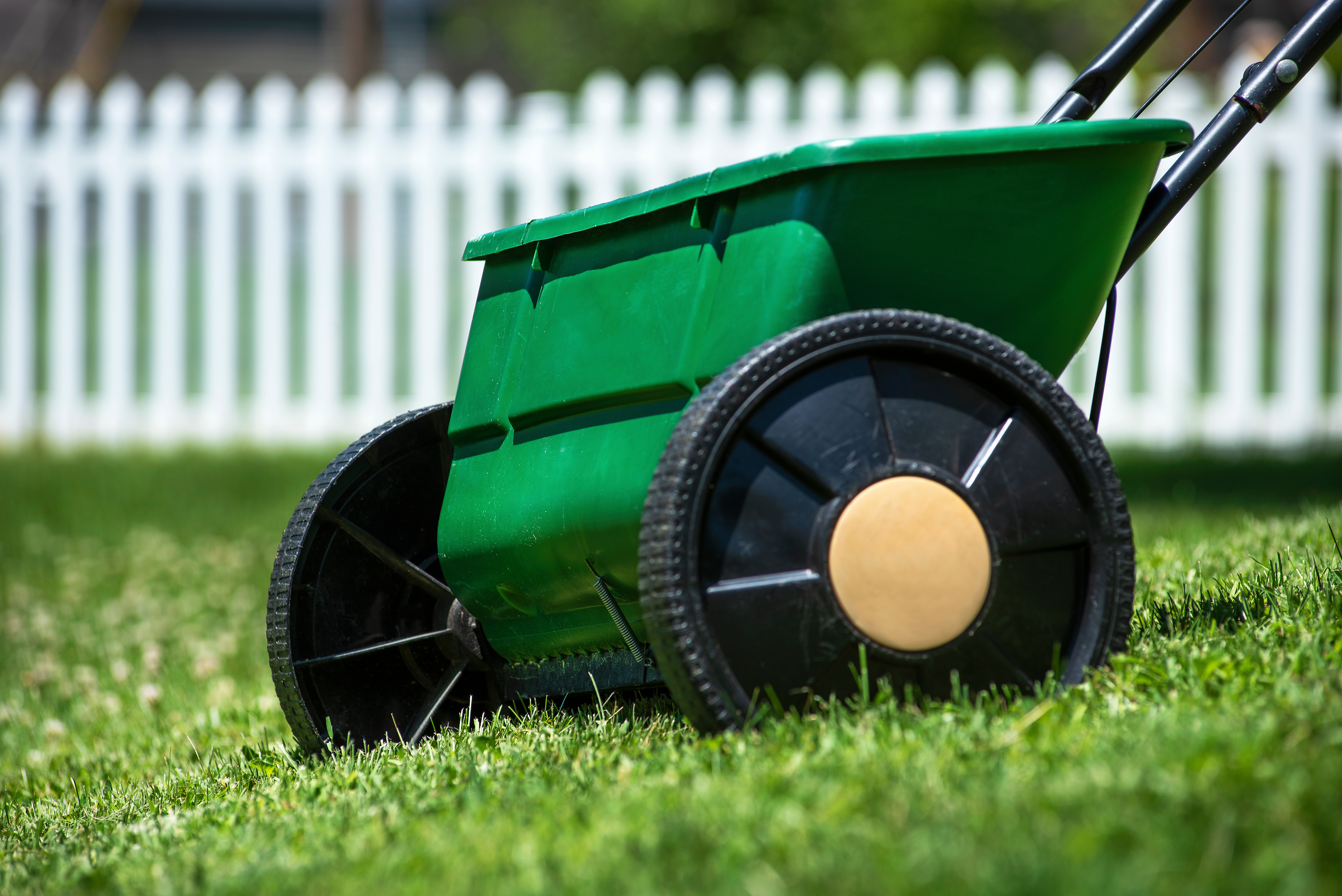
Late summer is the best time to overseed cool-season lawns in eastern Nebraska. Image from Adobe Stock.
Hoping to seed your bluegrass or fescue lawn this year? The optimal window for this is mid-August to mid-September in eastern Nebraska, so it’s time to start planning.
Overseeding versus Renovating Your Lawn
Overseeding should be part of your lawncare routine each year or every few years to increase the density of the turf and help it recover from die-out or thinning. Conversely, a renovation is considered a one-time treatment for a lawn that is very patchy or overrun with weeds. A renovation is probably in order if less than 50% of your lawn is covered by desirable turfgrass. At this point, it’s recommended to kill off all vegetation and start over. But first, you must figure out why the lawn is struggling. Is the area shaded most of the day? Is the ground a hardpan of compacted gunk? Do certain spots sit soggy between waterings, or bone dry? Amending the soil and adjusting irrigation and mowing practices usually need to be part of the solution. And in some cases, growing something other than turfgrass might make the most sense. Consult byf.unl.edu and turf.unl.edu for information on troubleshooting lawn problems.

Once you’ve determined whether you are overseeding or renovating your lawn, it’s time to map out the steps to success. This guide works backwards from seeding day with instructions laid out week by week that can be adapted to your timeline, as long as the seed is sown by September 15.
Week of July 26
GET YOUR SOIL TESTED. Allow a week for processing so you have time to correct any nutrient or pH imbalances. AgSource Labs, Midwest Labs and Servi-Tech Labs service eastern Nebraska. Contact Nebraska Extension for help interpreting test results.

MEASURE THE AREA. Square-footage is necessary to determine how much seed, starter fertilizer and compost to get, as well as other amendments from the soil test results.
Week of August 2
PROCURE SUPPLIES AND EQUIPMENT. Place product orders, reserve rentals and schedule deliveries to make sure you have what you need when you need it. Equipment should include an aerator to open up the soil and a drop spreader or slit seeder to apply the seed. (Don’t plan on seeding with a rotary spreader, since it distributes grass seed unevenly.) Think about personal protective equipment, too—safety glasses, earplugs or muffs, closed-toed boots, gloves, etc. should be on hand for using power tools.
Along with any amendments recommended by the soil test, source a yard or two of finely screened compost—enough to broadcast across the area at a ½-inch depth. Incorporating high-quality compost into your soil is perhaps the best way to solve many common underground issues including compaction and heavy clay, so don’t skip it.

Turfgrass seedlings also benefit from a starter fertilizer high in phosphorus. Make sure the only pre-emergent herbicide it contains is mesotrione or topramezone, as others would kill the new grass seedlings.
Week of August 9
SHOP AROUND FOR LAWN SEED. Purchase from a local, high-quality dealer to help ensure that you’re getting fresh, weed-free seed from cultivars adapted to Nebraska. Don’t skimp on price—seed quality is key to successful establishment. For lawn renovations, you’ll need 6-8 pounds of turf-type tall fescue or 2-3 pounds of Kentucky bluegrass per 1,000 square feet. Cut this amount in half for overseeding.
LAWN RENOVATIONS ONLY—KILL EXISTING VEGETATION. Apply glyphosate herbicide (which has little or no residual activity in the soil) according to label directions 10-14 days before seeding a lawn renovation. Wait for the vegetation to die before mowing.
Week of August 16
PREPARE THE SEEDBED. Mow the lawn short to 1½-2 inches for good seed-soil contact. Then aerate to incorporate soil improvements. To do this, water the area and wait a day or two for the soil to dry slightly. Then use an aerator that plugs 3-inch cores and go over the lawn 3-4 times in different directions. Broadcast ½ inch of compost and any amendments recommended by the soil test, using a rake or dragger to fill the holes and loosen any excess top growth. Lastly, apply the starter fertilizer according to label directions. Sweep excess material off any pavement to prevent it from reaching the sewer and polluting your local waterway.

Week of August 23
SEED THE LAWN. Divide the seed in half and apply over two passes going different directions. Lightly rake the area with tines turned upward or use a turf roller to settle the seed, then water lightly. Continue to water daily for ten minutes or so (up to three times a day depending on the weather) the first week after seeding.
Week of August 30
WATER FREQUENTLY AND WEED. Irrigate up to two times a day, letting the water run a bit longer so the roots develop downward. Check the soil daily with a screwdriver to make sure the top inch is moist, not soggy or dry. Hand pull any weeds that come up.
September until frost
WATER LESS AND MOW. Reduce irrigation to 2-3 times per week as the seedlings approach mowing height, watering more deeply with each application. Mow frequently to maintain an overseeded lawn at a height of 1½-2 inches for a few weeks, then gradually increase this over time. (For lawn renovations, wait to mow the new turf until it reaches 2-3 inches.) Maintain long-term at a height of 3-3½ inches, keeping mower blades sharp and never cutting more than 1/3 of the leaf height at one time.